
Dialed Down Anxiety is Everything We Need
The radical shift Dr. Foose makes that can change your relation to this troubling trait


Dr. Tracy Foose says we should reframe anxiety, “not as a frailty, but as the biological scaffolding of empathy, humility, and restraint.” While many of us feel concern about the rise of anxiety and worry about the deleterious effect of it on our children and grand-children, she argues it’s the only thing still holding us together:
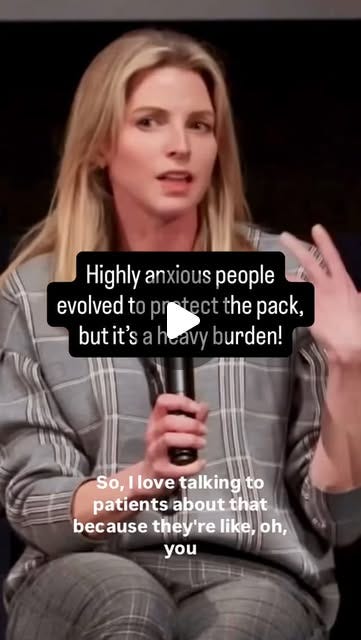
Her message has significant ramifications for people with anxiety. She writes, “My years spent in [my role as Director of the Anxiety Disorders Treatment Program at UCSF] taught me that we are wired for fear and anxiety and the more we attempt to rid ourselves of these emotions the stronger they become. When we sit with our fear and anxiety and ask, "why are you here?" these emotions cease to act as tormentors and take on their intended role as protective messengers: helping us become wiser, stronger, and aware of goals and direction we did not know were there.”
Let that sink in — anxiety is a protective messenger to help us be wise and strong. As a fellow highly anxious person, I discovered this role for anxiety only after 30 years of suffering. It was the Welcoming Prayer that taught me to welcome all my feelings and that once welcomed, anxious parts can be my biggest allies.
I also relate to Dr. Foose’ admonition, “Highly anxious people just have a harder time feeling certain they know a thing for sure, but this keeps them more intellectually humble, open-minded and less vulnerable to black and white, zero-sum thinking.”
She references this study: Convergent Neural Correlates of Empathy and Anxiety During Socioemotional Processing; and this one: Computations of uncertainty mediate acute stress responses in humans to explain that Bayesian learning makes Highly Anxious people more accurate in their predictions of future events. Bayesian learning is commonly used to discuss how to build more robust neural networks and artificial intelligence. Is it possible that highly anxious people have been selected for over time because their neural tendency to remain uncertain has given them an edge in predicting and avoiding the dangers of modern life, especially social dangers associated with targeted media manipulation?
In other words, do highly anxious people just have better bullshit detectors?
Perhaps.
But we can also mis-apprehend our “gift” and seek to avoid the unsettling consequences of anxiety, the heightened vigilance, second guessing, and exhaustion that comes from being constantly revved up by it. Dr. Foose explains that this can lead to an Anxiety disorder:
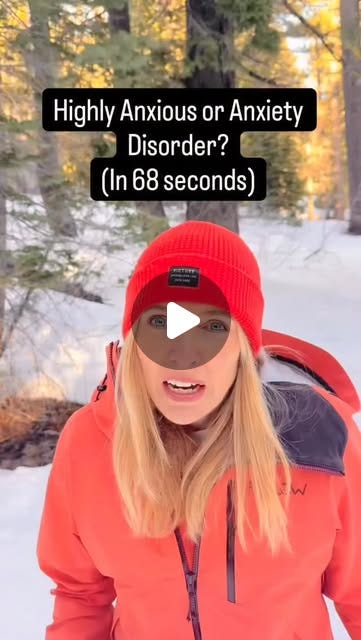
And anxiety disorders reduce our effectiveness in the world. So it is good to learn how to manage our anxiety and build a life that doesn’t fight against it, but integrates it.
If you are highly anxious, take heart, feel seen and heard, and welcome your unique ability to see and predict reality. In the moment of a panic attach or crippling sense of shame over what you are feeling, take a step back and give yourself some patience and support.
The long term project is to weave together an ecology of practice that helps you leverage the power of anxiety. This is what Dr. Foose is getting at when she talks about character:

I can affirm that character is not a simple fix, but it is a long term benefit. A benefit not only to those around you, but in the end to yourself. Anxiety has given you more humility, accuracy in predictions, empathy, and sensitivity to others suffering. As Dr. Foose says, we need as a society to stop rewarding insensitivity, arrogance and irresponsibility, and take narcissists off the stages. What we need now are Highly Sensitive Highly Anxious leaders who have learned to dial down, or balance out their anxiety with self compassion and an strengthening ecology of practice.
There's a lot thats great in this article, but I particularly enjoyed Dr Foose's idea that highly anxious people are better at predicting the future as their uncertainty gives them an edge in predicting and avoiding dangers. Lots of food for thought here.